 Add to Chrome
 Add to Firefox
 Add to Edge
On the calibration of survival models with competing risks
Jan 30, 2026
Survival analysis deals with modeling the time until an event occurs, and accurate probability estimates are crucial for decision-making, particularly in the competing-risks setting where multiple events are possible. While recent work has addressed calibration in standard survival analysis, the competing-risks setting remains under-explored as it is harder (the calibration applies to both probabilities across classes and time horizon). We show that existing calibration measures are not suited to the competing-risk setting and that recent models do not give well-behaved probabilities. To address this, we introduce a dedicated framework with two novel calibration measures that are minimized for oracle estimators (i.e., both measures are proper). We also introduce some methods to estimate, test, and correct the calibration. Our recalibration methods yield good probabilities while preserving discrimination.

Performance uncertainty in medical image analysis: a large-scale investigation of confidence intervals
Jan 23, 2026Performance uncertainty quantification is essential for reliable validation and eventual clinical translation of medical imaging artificial intelligence (AI). Confidence intervals (CIs) play a central role in this process by indicating how precise a reported performance estimate is. Yet, due to the limited amount of work examining CI behavior in medical imaging, the community remains largely unaware of how many diverse CI methods exist and how they behave in specific settings. The purpose of this study is to close this gap. To this end, we conducted a large-scale empirical analysis across a total of 24 segmentation and classification tasks, using 19 trained models per task group, a broad spectrum of commonly used performance metrics, multiple aggregation strategies, and several widely adopted CI methods. Reliability (coverage) and precision (width) of each CI method were estimated across all settings to characterize their dependence on study characteristics. Our analysis revealed five principal findings: 1) the sample size required for reliable CIs varies from a few dozens to several thousands of cases depending on study parameters; 2) CI behavior is strongly affected by the choice of performance metric; 3) aggregation strategy substantially influences the reliability of CIs, e.g. they require more observations for macro than for micro; 4) the machine learning problem (segmentation versus classification) modulates these effects; 5) different CI methods are not equally reliable and precise depending on the use case. These results form key components for the development of future guidelines on reporting performance uncertainty in medical imaging AI.
Scalable Feature Learning on Huge Knowledge Graphs for Downstream Machine Learning
Jul 01, 2025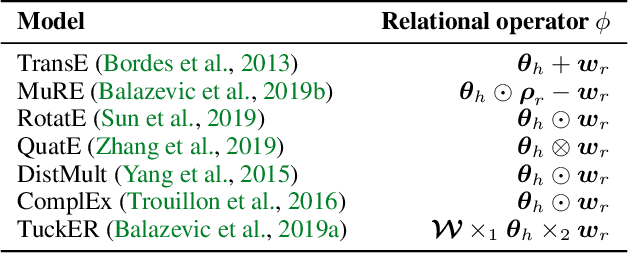
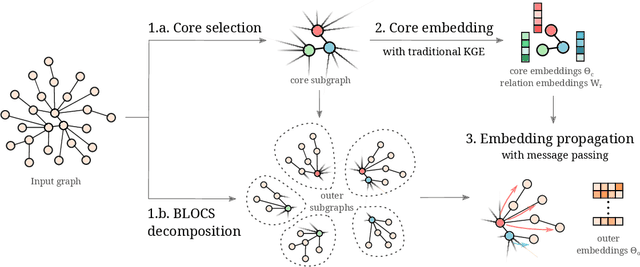
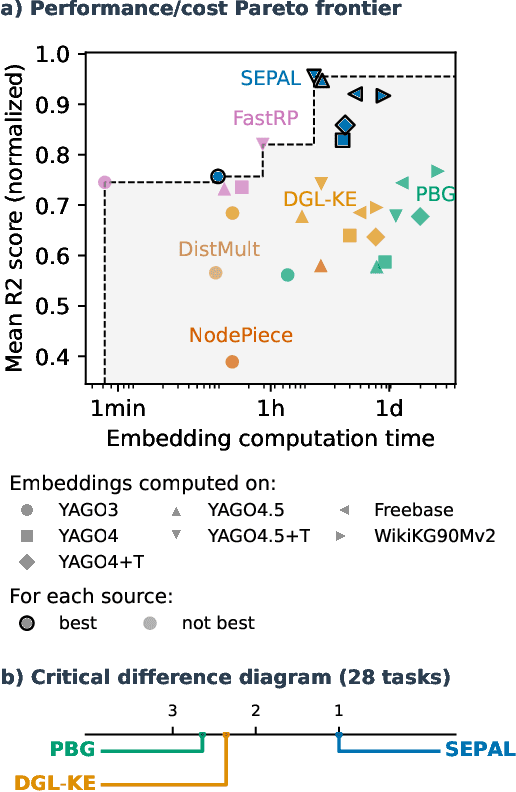
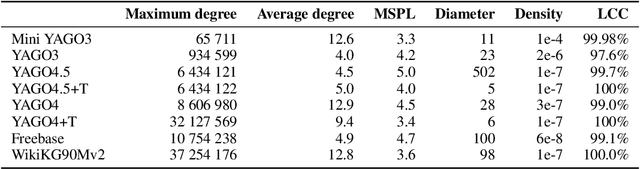
Many machine learning tasks can benefit from external knowledge. Large knowledge graphs store such knowledge, and embedding methods can be used to distill it into ready-to-use vector representations for downstream applications. For this purpose, current models have however two limitations: they are primarily optimized for link prediction, via local contrastive learning, and they struggle to scale to the largest graphs due to GPU memory limits. To address these, we introduce SEPAL: a Scalable Embedding Propagation ALgorithm for large knowledge graphs designed to produce high-quality embeddings for downstream tasks at scale. The key idea of SEPAL is to enforce global embedding alignment by optimizing embeddings only on a small core of entities, and then propagating them to the rest of the graph via message passing. We evaluate SEPAL on 7 large-scale knowledge graphs and 46 downstream machine learning tasks. Our results show that SEPAL significantly outperforms previous methods on downstream tasks. In addition, SEPAL scales up its base embedding model, enabling fitting huge knowledge graphs on commodity hardware.
Query-Level Uncertainty in Large Language Models
Jun 11, 2025It is important for Large Language Models to be aware of the boundary of their knowledge, the mechanism of identifying known and unknown queries. This type of awareness can help models perform adaptive inference, such as invoking RAG, engaging in slow and deep thinking, or adopting the abstention mechanism, which is beneficial to the development of efficient and trustworthy AI. In this work, we propose a method to detect knowledge boundaries via Query-Level Uncertainty, which aims to determine if the model is able to address a given query without generating any tokens. To this end, we introduce a novel and training-free method called \emph{Internal Confidence}, which leverages self-evaluations across layers and tokens. Empirical results on both factual QA and mathematical reasoning tasks demonstrate that our internal confidence can outperform several baselines. Furthermore, we showcase that our proposed method can be used for efficient RAG and model cascading, which is able to reduce inference costs while maintaining performance.
Table Foundation Models: on knowledge pre-training for tabular learning
May 20, 2025Table foundation models bring high hopes to data science: pre-trained on tabular data to embark knowledge or priors, they should facilitate downstream tasks on tables. One specific challenge is that of data semantics: numerical entries take their meaning from context, e.g., column name. Pre-trained neural networks that jointly model column names and table entries have recently boosted prediction accuracy. While these models outline the promises of world knowledge to interpret table values, they lack the convenience of popular foundation models in text or vision. Indeed, they must be fine-tuned to bring benefits, come with sizeable computation costs, and cannot easily be reused or combined with other architectures. Here we introduce TARTE, a foundation model that transforms tables to knowledge-enhanced vector representations using the string to capture semantics. Pre-trained on large relational data, TARTE yields representations that facilitate subsequent learning with little additional cost. These representations can be fine-tuned or combined with other learners, giving models that push the state-of-the-art prediction performance and improve the prediction/computation performance trade-off. Specialized to a task or a domain, TARTE gives domain-specific representations that facilitate further learning. Our study demonstrates an effective approach to knowledge pre-training for tabular learning.
False Promises in Medical Imaging AI? Assessing Validity of Outperformance Claims
May 07, 2025Performance comparisons are fundamental in medical imaging Artificial Intelligence (AI) research, often driving claims of superiority based on relative improvements in common performance metrics. However, such claims frequently rely solely on empirical mean performance. In this paper, we investigate whether newly proposed methods genuinely outperform the state of the art by analyzing a representative cohort of medical imaging papers. We quantify the probability of false claims based on a Bayesian approach that leverages reported results alongside empirically estimated model congruence to estimate whether the relative ranking of methods is likely to have occurred by chance. According to our results, the majority (>80%) of papers claims outperformance when introducing a new method. Our analysis further revealed a high probability (>5%) of false outperformance claims in 86% of classification papers and 53% of segmentation papers. These findings highlight a critical flaw in current benchmarking practices: claims of outperformance in medical imaging AI are frequently unsubstantiated, posing a risk of misdirecting future research efforts.
TabICL: A Tabular Foundation Model for In-Context Learning on Large Data
Feb 08, 2025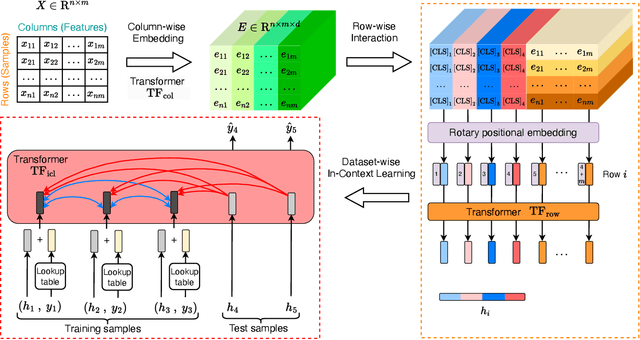
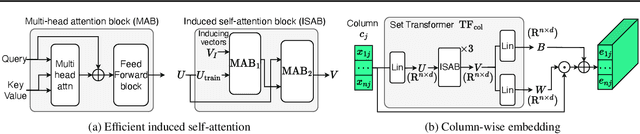
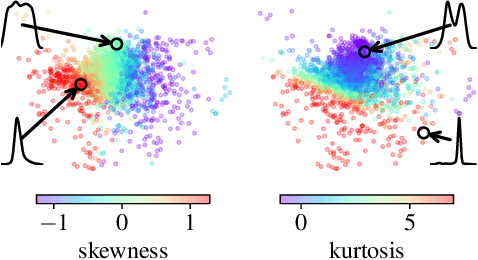
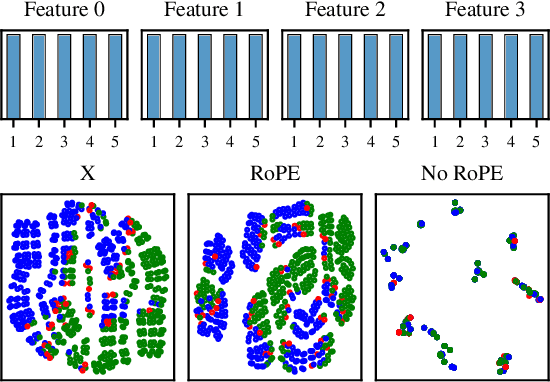
The long-standing dominance of gradient-boosted decision trees on tabular data is currently challenged by tabular foundation models using In-Context Learning (ICL): setting the training data as context for the test data and predicting in a single forward pass without parameter updates. While the very recent TabPFNv2 foundation model (2025) excels on tables with up to 10K samples, its alternating column- and row-wise attentions make handling large training sets computationally prohibitive. So, can ICL be effectively scaled and deliver a benefit for larger tables? We introduce TabICL, a tabular foundation model for classification, pretrained on synthetic datasets with up to 60K samples and capable of handling 500K samples on affordable resources. This is enabled by a novel two-stage architecture: a column-then-row attention mechanism to build fixed-dimensional embeddings of rows, followed by a transformer for efficient ICL. Across 200 classification datasets from the TALENT benchmark, TabICL is on par with TabPFNv2 while being systematically faster (up to 10 times), and significantly outperforms all other approaches. On 56 datasets with over 10K samples, TabICL surpasses both TabPFNv2 and CatBoost, demonstrating the potential of ICL for large data.
International AI Safety Report
Jan 29, 2025

The first International AI Safety Report comprehensively synthesizes the current evidence on the capabilities, risks, and safety of advanced AI systems. The report was mandated by the nations attending the AI Safety Summit in Bletchley, UK. Thirty nations, the UN, the OECD, and the EU each nominated a representative to the report's Expert Advisory Panel. A total of 100 AI experts contributed, representing diverse perspectives and disciplines. Led by the report's Chair, these independent experts collectively had full discretion over the report's content.
Survival Models: Proper Scoring Rule and Stochastic Optimization with Competing Risks
Oct 22, 2024When dealing with right-censored data, where some outcomes are missing due to a limited observation period, survival analysis -- known as time-to-event analysis -- focuses on predicting the time until an event of interest occurs. Multiple classes of outcomes lead to a classification variant: predicting the most likely event, a less explored area known as competing risks. Classic competing risks models couple architecture and loss, limiting scalability.To address these issues, we design a strictly proper censoring-adjusted separable scoring rule, allowing optimization on a subset of the data as each observation is evaluated independently. The loss estimates outcome probabilities and enables stochastic optimization for competing risks, which we use for efficient gradient boosting trees. SurvivalBoost not only outperforms 12 state-of-the-art models across several metrics on 4 real-life datasets, both in competing risks and survival settings, but also provides great calibration, the ability to predict across any time horizon, and computation times faster than existing methods.
Confidence intervals uncovered: Are we ready for real-world medical imaging AI?
Sep 27, 2024

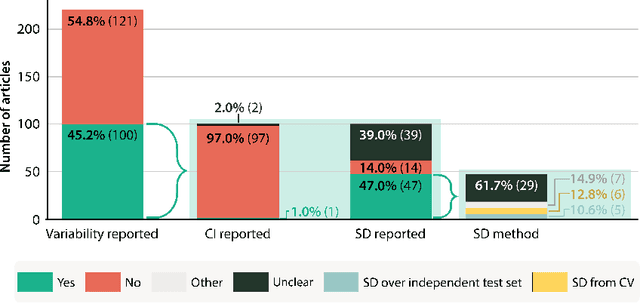

Medical imaging is spearheading the AI transformation of healthcare. Performance reporting is key to determine which methods should be translated into clinical practice. Frequently, broad conclusions are simply derived from mean performance values. In this paper, we argue that this common practice is often a misleading simplification as it ignores performance variability. Our contribution is threefold. (1) Analyzing all MICCAI segmentation papers (n = 221) published in 2023, we first observe that more than 50% of papers do not assess performance variability at all. Moreover, only one (0.5%) paper reported confidence intervals (CIs) for model performance. (2) To address the reporting bottleneck, we show that the unreported standard deviation (SD) in segmentation papers can be approximated by a second-order polynomial function of the mean Dice similarity coefficient (DSC). Based on external validation data from 56 previous MICCAI challenges, we demonstrate that this approximation can accurately reconstruct the CI of a method using information provided in publications. (3) Finally, we reconstructed 95% CIs around the mean DSC of MICCAI 2023 segmentation papers. The median CI width was 0.03 which is three times larger than the median performance gap between the first and second ranked method. For more than 60% of papers, the mean performance of the second-ranked method was within the CI of the first-ranked method. We conclude that current publications typically do not provide sufficient evidence to support which models could potentially be translated into clinical practice.